Listening Party Experience

This is a “selfie” on one of the happiest days.

LKHappy2

I went to a fancy listening party downtown in the 300 Third Tower. The listening party was in the party room and the view of downtown Little Rock was really nice.
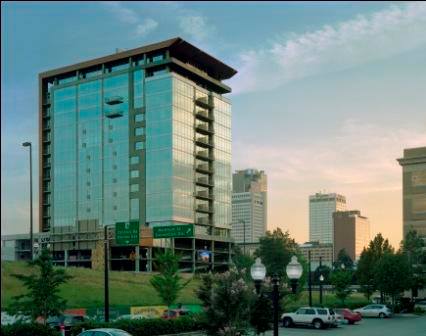
300Building downtown view

The listening party was for the KUAR Arts & Letters, “Searching for Latini” episode. UALR Chancellor Joel Anderson came to the event and even gave a short speech of his support for this project.

So, what does any of this have to do with me, and why do I look so happy in the selfie?

In December last year, The Damsels in Distress were hired to create music for a new program on KUAR called Arts & Letters. We wrote the opening theme music – also used for the radio spots – based from “Corey’s Song.”

kuar

The first show, “Ethics Bowl” aired in January. It was about what “ethics” are and played a sample Ethics Bowl.

From left: Marla Cole, Angela Johnson and Dr. Allison Merrick hold a trophy after competing at the Texas Regional Ethics Bowl in San Antonio, Texas. Credit ualr.edu

From left: Marla Cole, Angela Johnson and Dr. Allison Merrick hold a trophy after competing at the Texas Regional Ethics Bowl in San Antonio, Texas.
Credit ualr.edu

On one hand, we wanted the music to emphasize the experience of a game show -poppy, fast, bright, upbeat, but also with an edge (for the feel of competitiveness). We also wanted to put a serious tone for the idea and debate of “ethics.”

Here’s how it works.

As composers, we get a phone call. In the call, there is a title and description of the coming show. The discussion extends to what sort of music that specific show needs in terms of how many songs, length of songs, the general “feel” or “mood” of the show. This call is followed up with an email of the script. We (The Damsels in Distress) each read through the script and then together, we brainstorm general ideas – kind of like story boarding, but with music.  We grab our instruments and go to separate rooms and write.
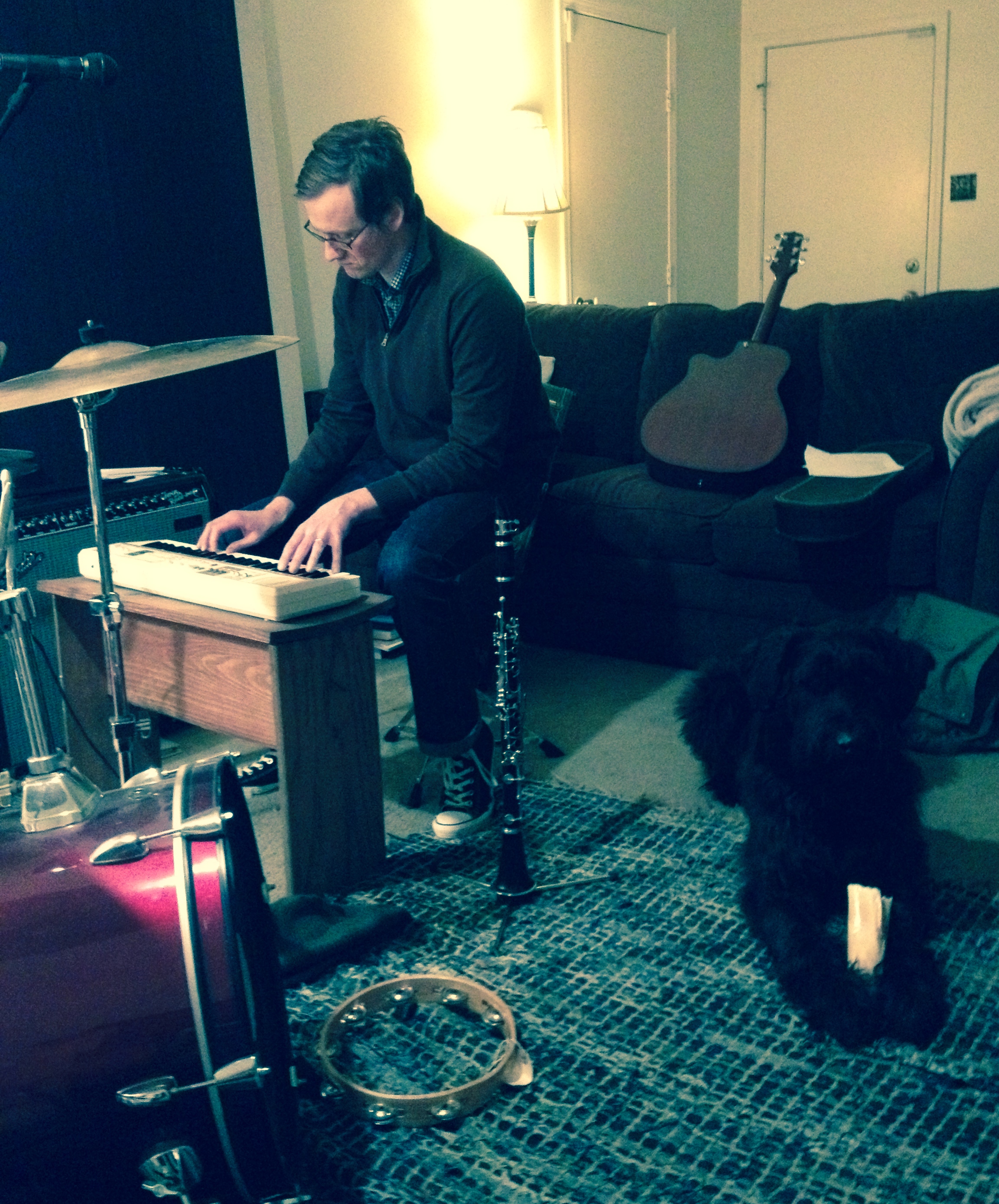


We come back together and do a rough recording of what we wrote. We write off of each others initial song, and create a “sketch” – which is a more detailed recording with many different parts we can mute/unmute. Once we get the detailed sketch we like, we record on our more professional gear.


This does not all happen in one day! This process takes weeks. Once we have recorded and are satisfied, we email the files. From here, we may need to rewrite or rerecord songs based on what the producer wants. The show airs, and we get a check in the mail.

So, back to the Listening Party.

At the Listening Party everyone that worked on the show ate delicious Thai food catered by Chang’s and listened to “Searching for Latini” live. It was super exciting – much like an actor’s cast party when the production is completed. It was also the first time a lot of us got to meet each other because so much of the show is done through phone conversation, email, and separate recording sessions.

“Searching for Latini”  is about Brunetto Latini, the teacher of Dante and the first translator of Aristotle and Cicero into a vernacular language. We wanted the music to sound Italian/Italian Renaissance for this show.

Listen to Searching for Latini here!

Credit Parlor Press

Credit Parlor Press

Listen to the songs we wrote for “Searching for Latini” here.

SongsforKUARDisc

Hanging Art with Ephraim

When the wall is bare, and you have lovely and thought provoking  art. Why not hang your lovely and thought provoking art piece in this bare wall space?

This WAS the bare wall.

piano

The following post is about my friend Ephraim McNair hanging lovely and though provoking art.

Ephraim is a graphic and collage artist who worked in a gallery for a stint. He worked in the exhibitions offices of University of Arkansas at Little Rock (UALR), and his alma mater, Western Michigan University. At UALR he enjoyed helping Nathan Larson manage and install pieces from the permanent collection in offices across campus. At Western, his favorite job was lighting exhibits from 30′ up on the air on the scissor lift.

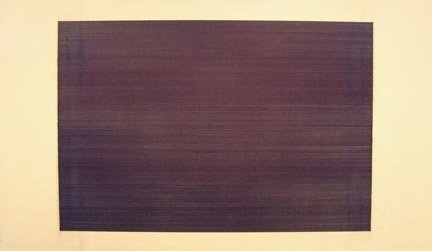
We met through his wife Marita, whom I worked with at UALR. He initially hung the lovely and thought provoking art piece  “Orthodoxy” by artist Curt Bozif, in our home office.

Orthodoxy

“Orthodoxy” by Curt Bozif

This was when my art studio took over the entire front room.

IMG_2971

Once we moved my studio, we wanted to move  “Orthodoxy” as well – so it wouldn’t get any paint splatters on it. Ephraim so graciously worked with us again – by hanging “Orthodoxy” as well as wrote for Paper Opera about this experience. The following is by Ephraim McNair:

Art hanging, June 1, 2014

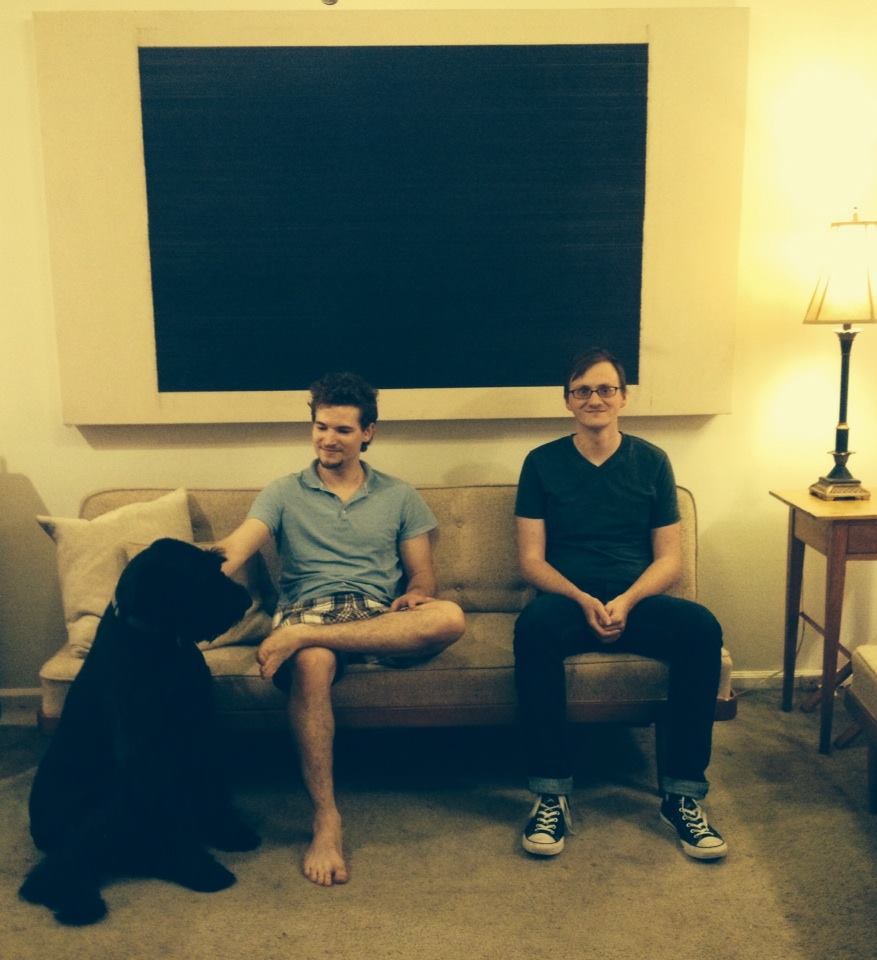
The piece of art is 48″ tall x 96″ wide x 4“ deep canvas on masonite. It is solidly built, with vertical bracing on the back reinforcing the masonite, and perimeter framing to which the canvas is attached.

There are many ways this piece could be hung but the artist did not attach any wires or D rings to the back. Instead of installing our own, we took advantage of the structural soundness of the piece and hung it on some vertical rails mounted to the wall.

hangingpainting5

I brought a pretty basic tool box with me for the installation. Here is what we ended up using:
Drill bits
3″ drywall screws
Power drill with 2-headed apex (a phillips and slotted head on the same bit, these are super useful)
Tape measure
36″ Level
Pencil
Stud finder
Masking tape

The first thing to do was determine position. We knew it should go behind the couch but how high above it? Micah took a seat and we measured a comfortable distance above his head from the floor. To that measurement we added the height of the painting, extended the tape measure and held it against the wall.

Waaay too high. From the ceiling there was only a few inches to where the top of the painting would be. While it made room to sit on the couch comfortably, the resulting proportion above and below the piece would have been rather unbalanced. Instead we opted to set the piece about level with the top of the piano and put enough room between the couch and art so sitters wouldn’t feel like they should lean their head on the painting.

There was a good deal more measuring that went on which informed the final decision but I won’t bore you with the details. Personally, I rather enjoy examining a space numerically before working it and discovering spatial relationships.

Once we knew where we wanted the painting, I got out the stud finder and ran some masking tape along the width of the area where the painting would end up. The tape provides a surface for the stud finder to run on without marring the paint as well as a medium for marking the location of found studs.

After we found the studs, we prepared the rails for installation. Micah drilled pilot holes several inches from both ends and drilled in the screws so that the points of each were just poking through. The rails are 1-by-2’s and in order to maximize support for the depth of the painting, we put the screws in so the 2″ length would be perpendicular to the wall. Then we marked one L(eft), the other R(ight) and indicated which end we intended to use as the top.

Once the rails were prepped we marked the location of the top of the rails on the wall at our chosen support studs. This is the most important step in regards to the levelness of the painting; “Measure once cut twice” definitely applies here.

Calculating the location of the top of the rails was very straightforward. We simply measured the height of the (p)iano, added to that the (h)eight of the painting and then removed 1″ from the total for the width of the wood forming the painting’s structure. This can be expressed with the equation p + h – 1″ = measure for top of rail.

L.K. and Micah’s carpet is the comfortable squishy residential kind so I measured from the top of the toe board, which wasn’t that high, to eliminate any variance in rug density. On the wall, I penciled a T with the top bar at the measure, and, after re-measuring both marks, asked for the level.

Holding the level and the rail together, we put the top of the rail at the top of the T and plumbed the rail before pushing the screw points into the the wall. We circled the resulting marks and drilled pilot holes at those points.

At one of the marks the drill went right into the wall with no resistance after the first quarter inch of drywall. A clear indication that we had missed the stud! We checked the stud position and adjusted our rail, re-measured and re-marked its top, plumbed it and then tried again. Resistance all the way through! We had hit the stud.

With the pilot holes drilled, we screwed the rails to the wall,  lifted the painting into place and stepped back to admire our handiwork. Since we were confident in the position of our rails we didn’t even bother checking that the painting was level.

With the painting up, the finishing touches revolved around organizing the room and justifying it to established focal points and the wonderful painting which had finally found its home.

hangingpainting4

“It makes a certain kind of sense to put the largest painting in ones collection in the largest room of the house,” Micah said.

Art Romance

What do you think of when I say “hot date night” or “a night out on the town?”

M took me out for one of these. We went and looked at rows and rows – touching every corner of smooth and toothy – cream, white, and toned – thick and thin – pages of sketchbook paper.

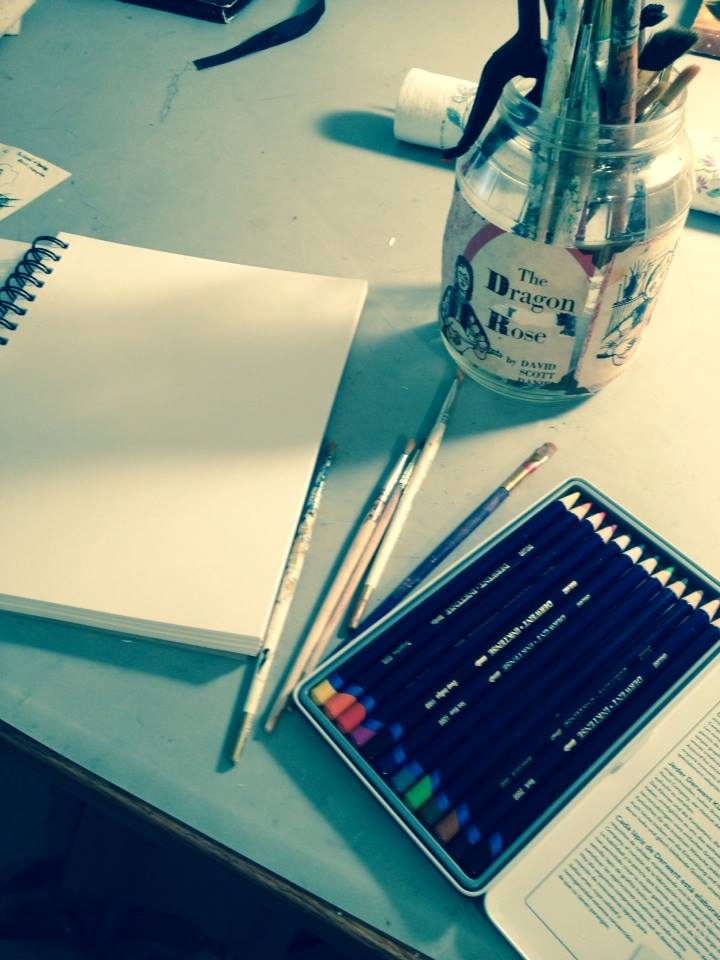
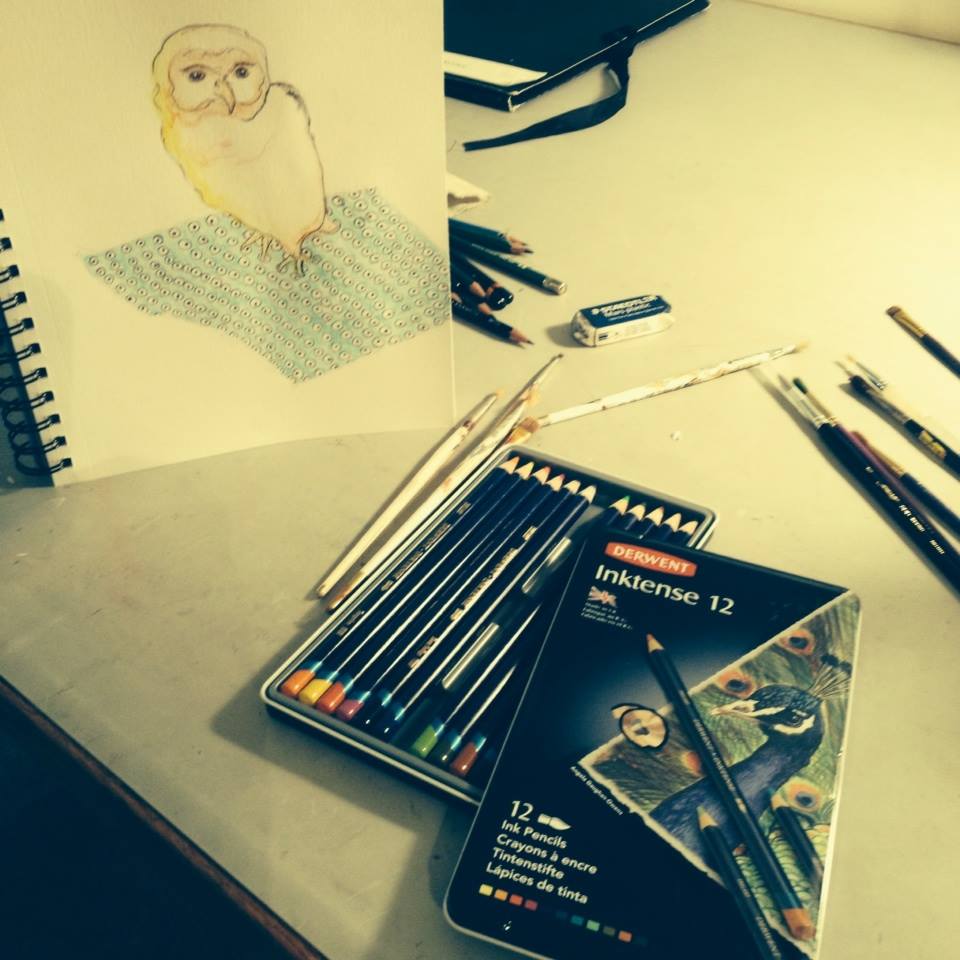
M bought me a Canson Sketchbook – 7 x 10 – 98lb and a 12 pack of Derwent Inktense pencils. $$$$

canson       inktense

Well, I did say it was a date!

Of course when we got home, I immediately went to my studio to see what these Inktense pencils were all about. Which is probably the downside for M of taking me on an art date.

inktense10 inktense3

The Inktense pencils are ink based, so after applying water, the ink dries and another layer of ink pencil can be added. Something else I think is really great about the Inktense pencils – and this is for the printmakers out there –  the inktense pencils blend well when working with water based ink. This means that if you print and some parts of your print comes out grainy, you can cover that up with the Inktense pencils.

Pretty cool stuff!

inktense5 inktense

I sketched an owl because I have been looking at the owls from Raptor Rehab of Central Arkansas.

inktense4

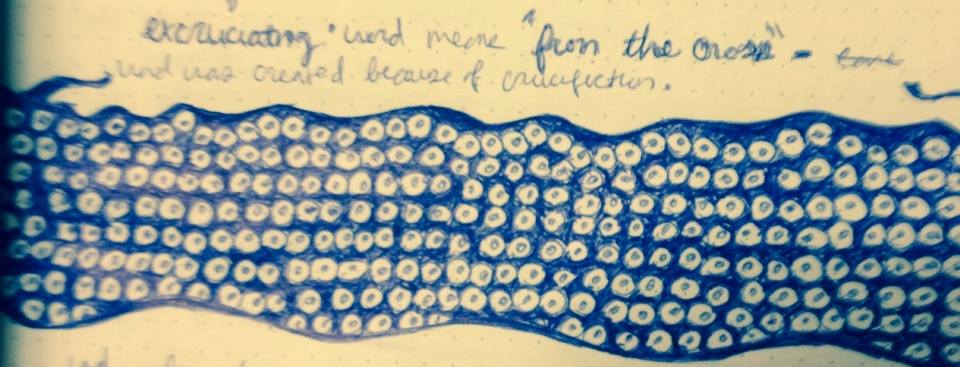
I have been drawing this circle pattern for weeks now at work meetings and at Grace Church on Sundays – so I put it in with the owl sketch.

inktensepattern

When Does Cultural Production End?

newman_promise2

Anyone can produce art. But when do we get to stop? I don’t mean here a question of the boundaries of a particular object or movement, but on a practical level, at what point has the painter, the author, or the sculptor finally said what it is that needed saying, after which time they get to cast aside the tools and do something else? Or are we to believe that once what needed saying has been said, one must continue to stalk one’s computer, ever after shackled to the task of churning out cleverness and replication without regard for usefulness?

Certainly we have seen writers like Žižek continue long after their relevant point has been made. Conversely, we know that Wittgenstein was able to walk away.

Cultural production is the worrying of a splinter beneath the skin, that shard having entered to some level of depth during some earlier time, the result of short-sightedness or recklessness or contingency, now affecting parts of the body that were meant for something other than splinters. Pushing a splinter out is frustratingly slow work, especially if the cells have become used to working around it. How does one convince others to sustain the work? How does one convince oneself?

I read a story recently that a girl had an asthma attack and died at her elementary school in Philadelphia. She had an albuterol inhaler which could have saved her, but the school had a policy that all medications had to be locked in a cabinet where only the school nurse had a key. And they had another policy in place where the school nurse rotated through five schools, one each day. The result being that when a girl needed medication, she couldn’t get it because the nurse was at a different school. Here we have two rules: medication must be locked up in the nurses’ office, and nurses must rotate. These rules were not meant to communicate. They were the result of separate conversations, one where children were taking each other’s medication and another where budgets did not allow a nurse at every school. But when these rules were implemented, it created an object which pierced skin. In the end, a girl died.

How much larger the implications become when we are speaking not of the policies of one school district, but of assumptions in the very way we speak, move, get and give money, take up projects and react to the projects of others—the collected mass passed down about what humanity can do—to each other, to ourselves, to the land.

What barbed object dragged itself across us, and for how long? How is it that the human condition is a history of rake, of abrasion, of pain and neglect? There are so many forms of life, they all have their operant assumptions, and their edges don’t match. The skin is porous and prone to puncture. Everywhere people die for the preservation of rules.

Cultural production is the outlet through which we test alternate realities, locating a conflict and working at it, worrying some issue, taking up a burden which may not be completed before our lives are, under the influence of a faith which says that resolve and creativity alone can push the splinter back out.

Cultural production is the testing ground for solutions, those times we attempt to articulate a reality which doesn’t exist and may never exist. The role of the artist is to chart the new way. As Barnett Newman writes, “Reality is what the artist makes it.” As such, cultural production ends in one of two ways: either when reality looks how the artist wanted it, or when we lose faith that art can change the conditions of our existence.

Matt Siemer
Contributor

Where do you show your work?

Person you meet: “What do you do?”
You: “I’m an artist”
Me: “I’m an artist.”

Person you meet: “What kind of art do you do?”
You: “Tells the person what kind of art you do.”
Me: “Mumble my way through this question spouting out oil paint, figures, and printmaking somewhere through the murk.”

Person you meet: “Do you show anywhere?” or “Where can I see your work?”
You: “Tells the person where they can see your work.”
Usually Me: “I have a website and I blog. I’m not showing anywhere. I’m not really selling anything. Translation – I make art and hide in my studio.”

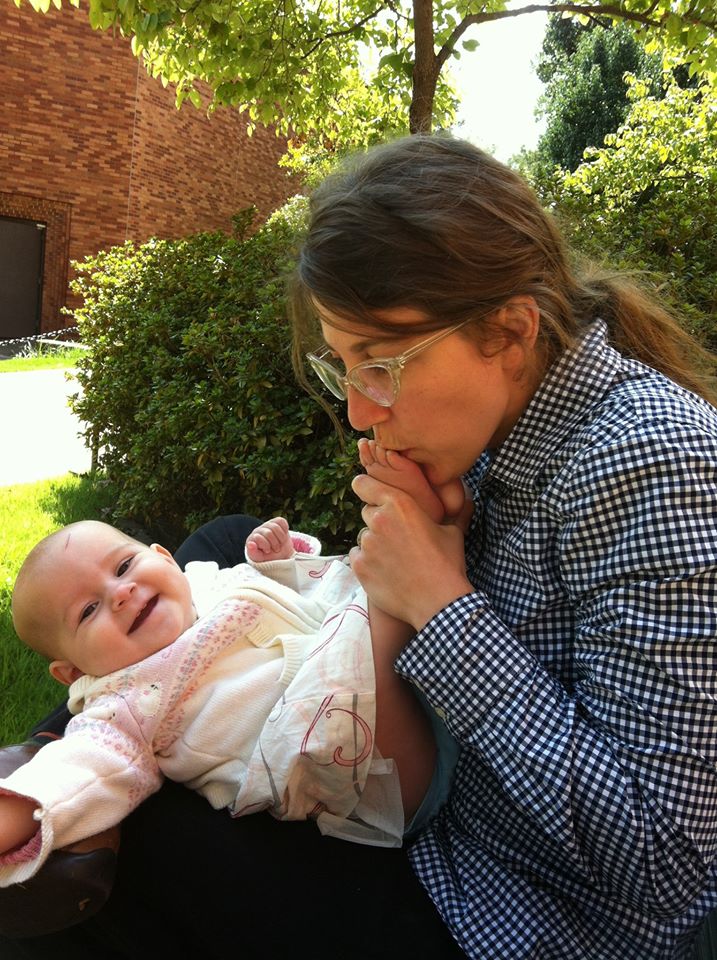
“I also kiss baby feet”

baby

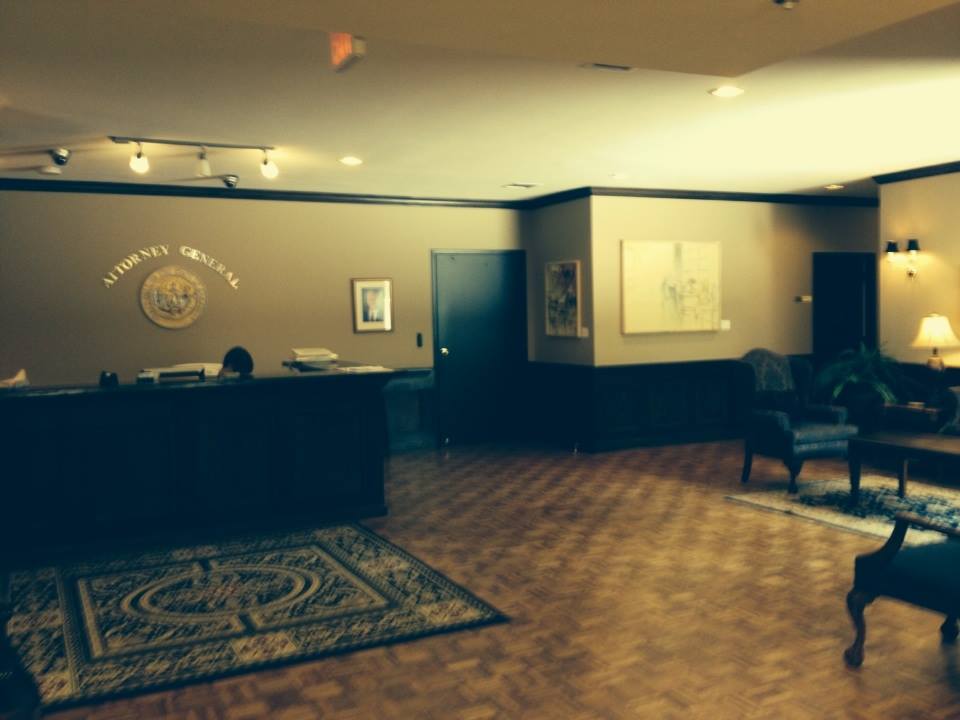
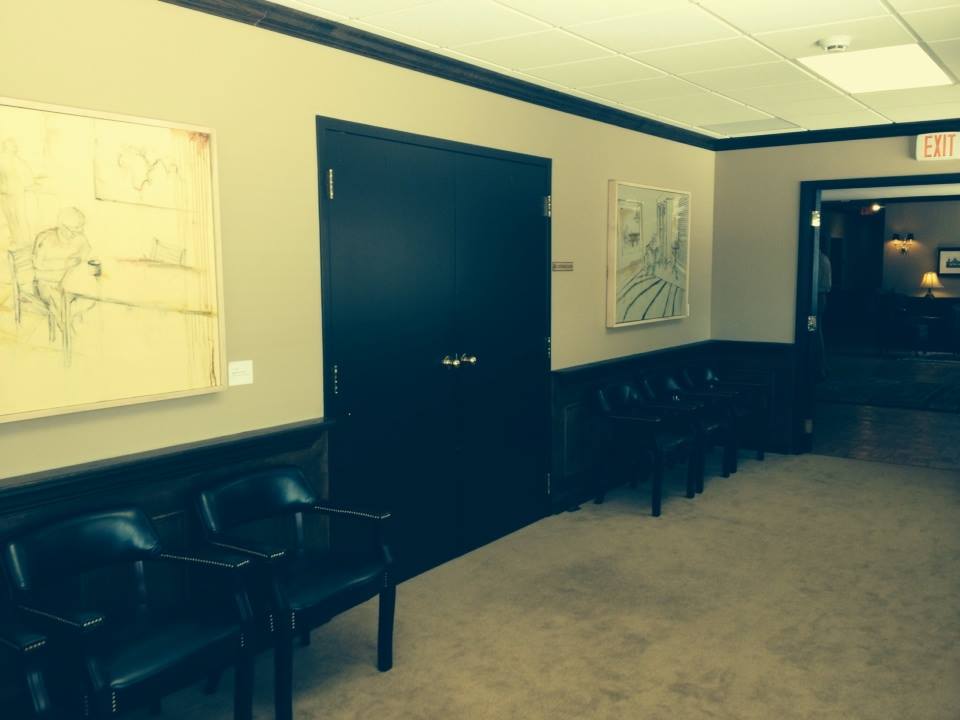
Today through the end of the year – Me: “I have a website and I blog. I also have some work up right now at the Arkansas Attorney General’s office downtown in the Two Towers Building.”

How did this happen? Did I get discovered through my website or blog? Was there someone going from door to door in my neighborhood looking for just the right art? Did I go from office to office with samples of my work to see if anyone was looking for my work? It all happened through the Arkansas Arts Council.

I am a member of the Arkansas Artist Registry, and so I get emails of opportunities to show, sell, to apply for grants and fellowship, and other artist things. The Arkansas Arts Council sent a call for submission: “The Arkansas Attorney General’s Office seeks submissions from the Arkansas Artist Registry artists for a revolving exhibition of selected works in the reception area of the Office, which is open to the public for meetings, conferences and other events.”  and this attachment

AG Call for Artists Info Page_final

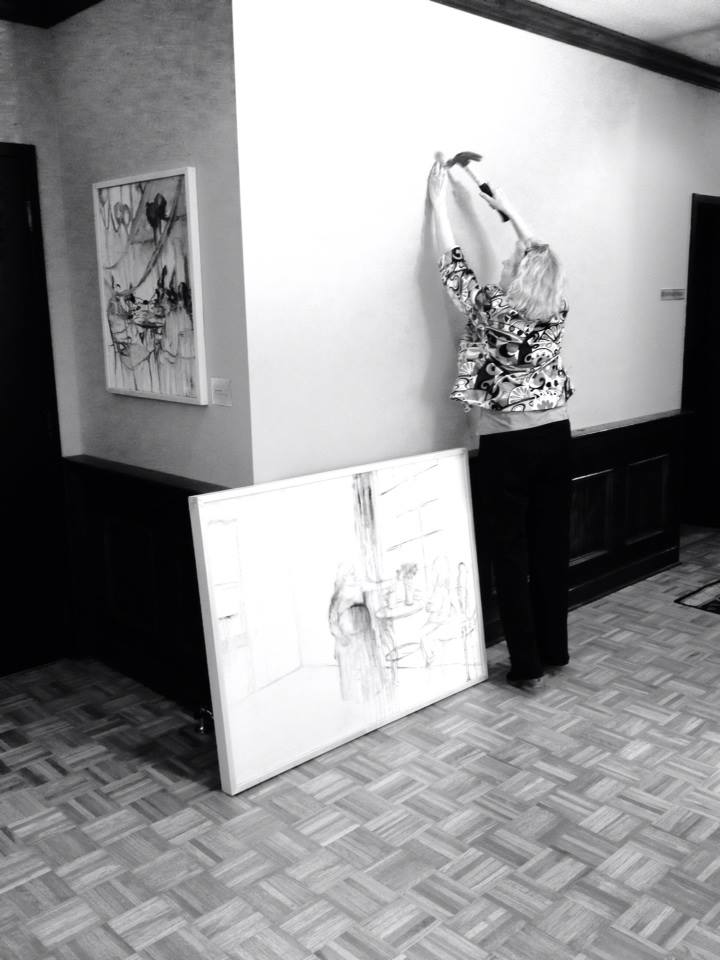
I submitted and was selected! Laurie Jo helped me to hang the show.

Show1 Show4 Show2
Show10 Show11
Show12Show5
Show9Show7Show6
Show3Show13