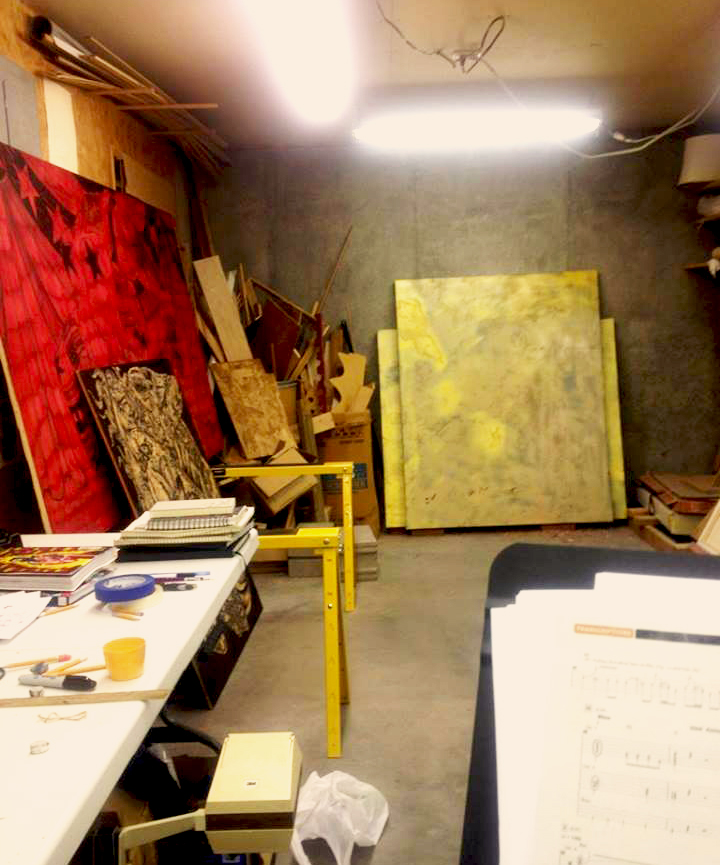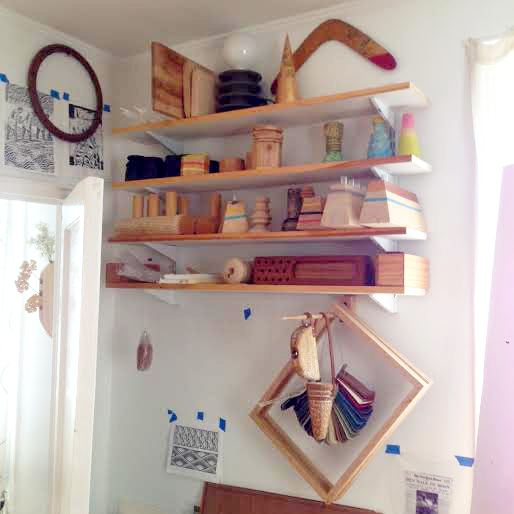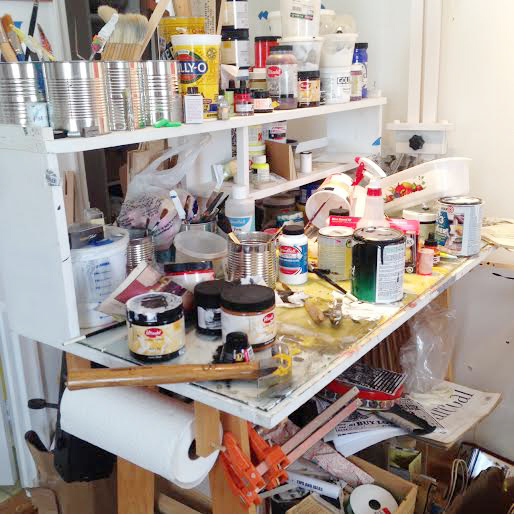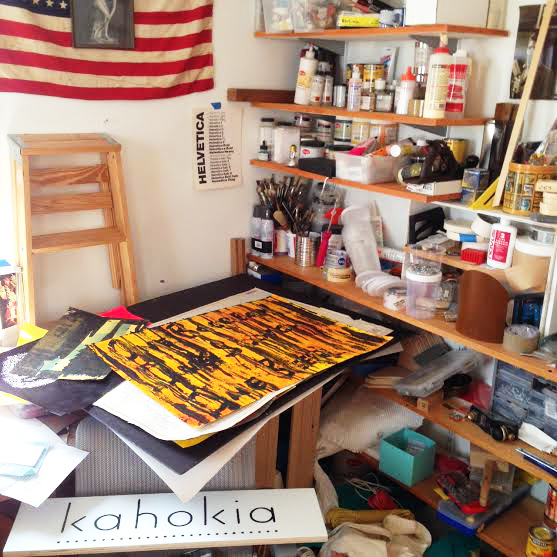
Art Romance

What do you think of when I say “hot date night” or “a night out on the town?”

M took me out for one of these. We went and looked at rows and rows – touching every corner of smooth and toothy – cream, white, and toned – thick and thin – pages of sketchbook paper.

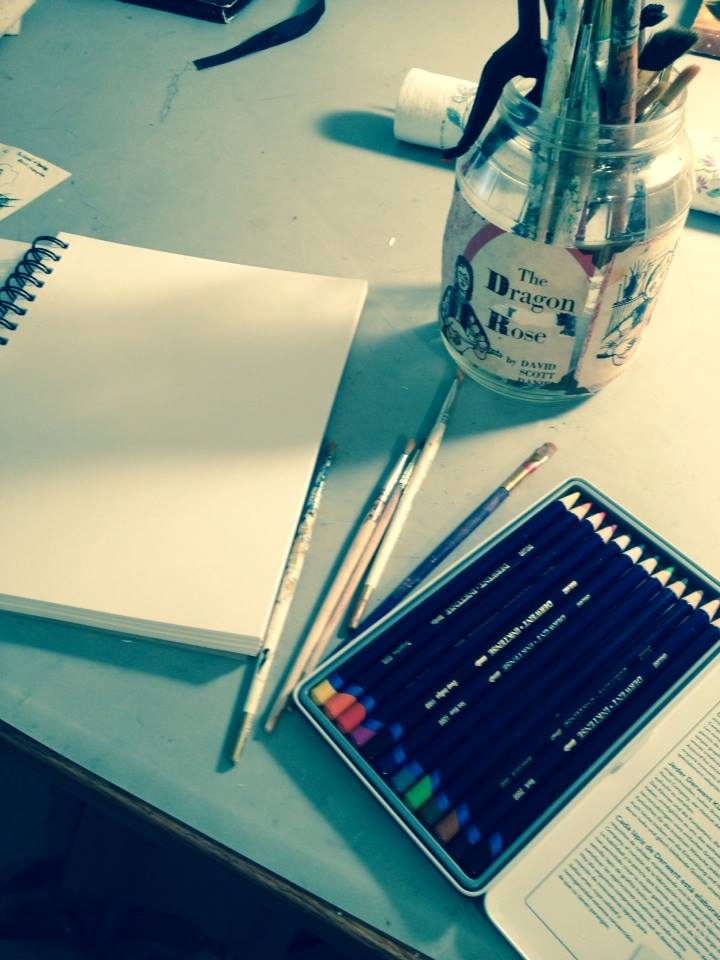
M bought me a Canson Sketchbook – 7 x 10 – 98lb and a 12 pack of Derwent Inktense pencils. $$$$

canson       inktense

Well, I did say it was a date!

Of course when we got home, I immediately went to my studio to see what these Inktense pencils were all about. Which is probably the downside for M of taking me on an art date.

inktense10 inktense3

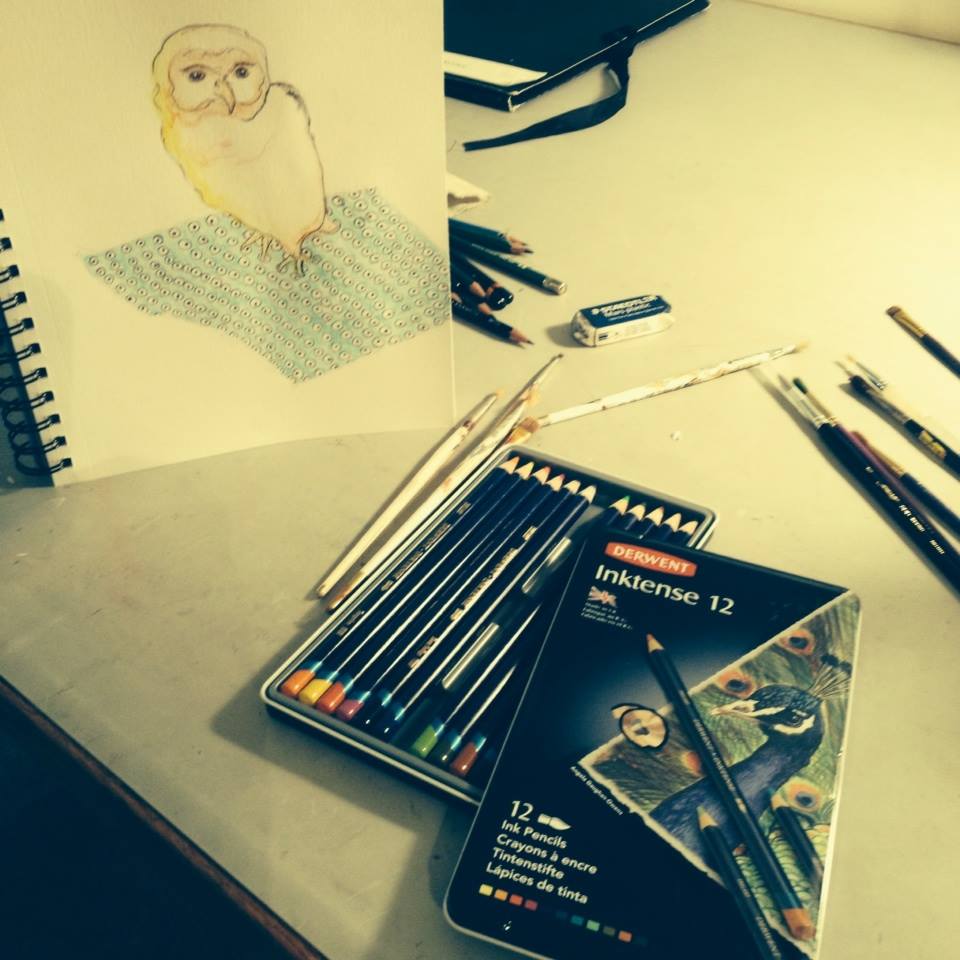
The Inktense pencils are ink based, so after applying water, the ink dries and another layer of ink pencil can be added. Something else I think is really great about the Inktense pencils – and this is for the printmakers out there –  the inktense pencils blend well when working with water based ink. This means that if you print and some parts of your print comes out grainy, you can cover that up with the Inktense pencils.

Pretty cool stuff!

inktense5 inktense

I sketched an owl because I have been looking at the owls from Raptor Rehab of Central Arkansas.

inktense4

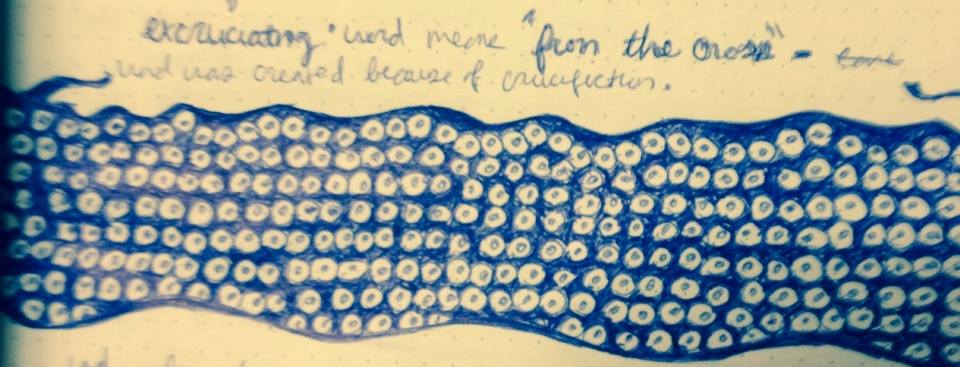
I have been drawing this circle pattern for weeks now at work meetings and at Grace Church on Sundays – so I put it in with the owl sketch.

inktensepattern

When Does Cultural Production End?

newman_promise2

Anyone can produce art. But when do we get to stop? I don’t mean here a question of the boundaries of a particular object or movement, but on a practical level, at what point has the painter, the author, or the sculptor finally said what it is that needed saying, after which time they get to cast aside the tools and do something else? Or are we to believe that once what needed saying has been said, one must continue to stalk one’s computer, ever after shackled to the task of churning out cleverness and replication without regard for usefulness?

Certainly we have seen writers like Žižek continue long after their relevant point has been made. Conversely, we know that Wittgenstein was able to walk away.

Cultural production is the worrying of a splinter beneath the skin, that shard having entered to some level of depth during some earlier time, the result of short-sightedness or recklessness or contingency, now affecting parts of the body that were meant for something other than splinters. Pushing a splinter out is frustratingly slow work, especially if the cells have become used to working around it. How does one convince others to sustain the work? How does one convince oneself?

I read a story recently that a girl had an asthma attack and died at her elementary school in Philadelphia. She had an albuterol inhaler which could have saved her, but the school had a policy that all medications had to be locked in a cabinet where only the school nurse had a key. And they had another policy in place where the school nurse rotated through five schools, one each day. The result being that when a girl needed medication, she couldn’t get it because the nurse was at a different school. Here we have two rules: medication must be locked up in the nurses’ office, and nurses must rotate. These rules were not meant to communicate. They were the result of separate conversations, one where children were taking each other’s medication and another where budgets did not allow a nurse at every school. But when these rules were implemented, it created an object which pierced skin. In the end, a girl died.

How much larger the implications become when we are speaking not of the policies of one school district, but of assumptions in the very way we speak, move, get and give money, take up projects and react to the projects of others—the collected mass passed down about what humanity can do—to each other, to ourselves, to the land.

What barbed object dragged itself across us, and for how long? How is it that the human condition is a history of rake, of abrasion, of pain and neglect? There are so many forms of life, they all have their operant assumptions, and their edges don’t match. The skin is porous and prone to puncture. Everywhere people die for the preservation of rules.

Cultural production is the outlet through which we test alternate realities, locating a conflict and working at it, worrying some issue, taking up a burden which may not be completed before our lives are, under the influence of a faith which says that resolve and creativity alone can push the splinter back out.

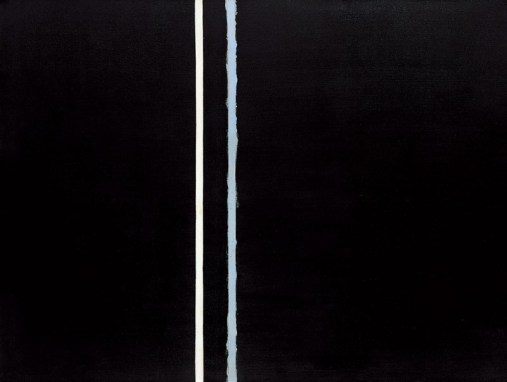
Cultural production is the testing ground for solutions, those times we attempt to articulate a reality which doesn’t exist and may never exist. The role of the artist is to chart the new way. As Barnett Newman writes, “Reality is what the artist makes it.” As such, cultural production ends in one of two ways: either when reality looks how the artist wanted it, or when we lose faith that art can change the conditions of our existence.

Matt Siemer
Contributor

Where do you show your work?

Person you meet: “What do you do?”
You: “I’m an artist”
Me: “I’m an artist.”

Person you meet: “What kind of art do you do?”
You: “Tells the person what kind of art you do.”
Me: “Mumble my way through this question spouting out oil paint, figures, and printmaking somewhere through the murk.”

Person you meet: “Do you show anywhere?” or “Where can I see your work?”
You: “Tells the person where they can see your work.”
Usually Me: “I have a website and I blog. I’m not showing anywhere. I’m not really selling anything. Translation – I make art and hide in my studio.”

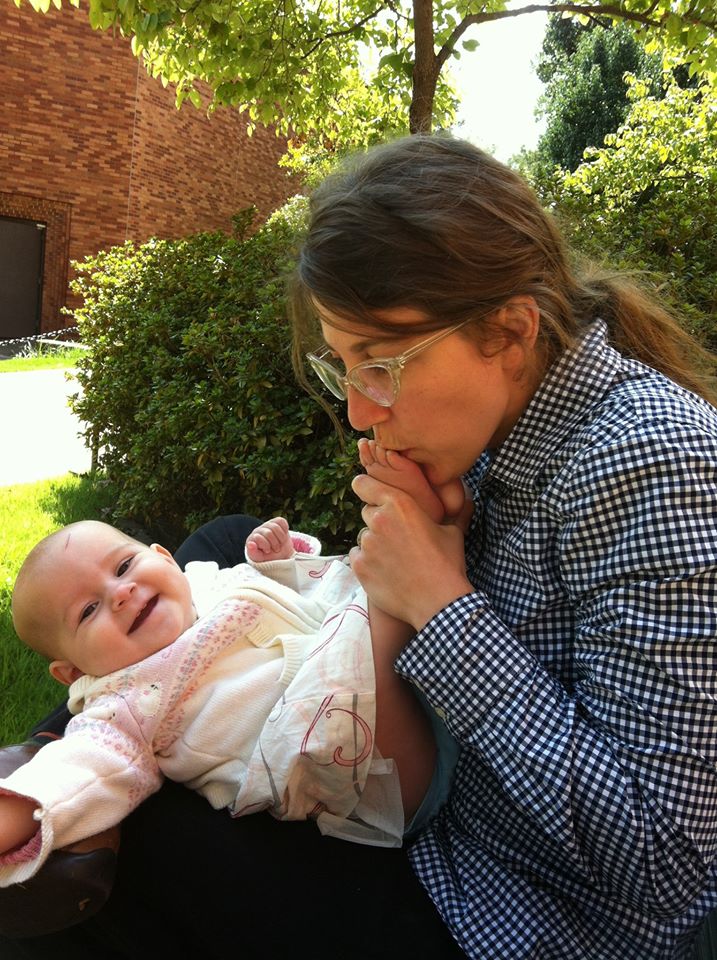
“I also kiss baby feet”

baby

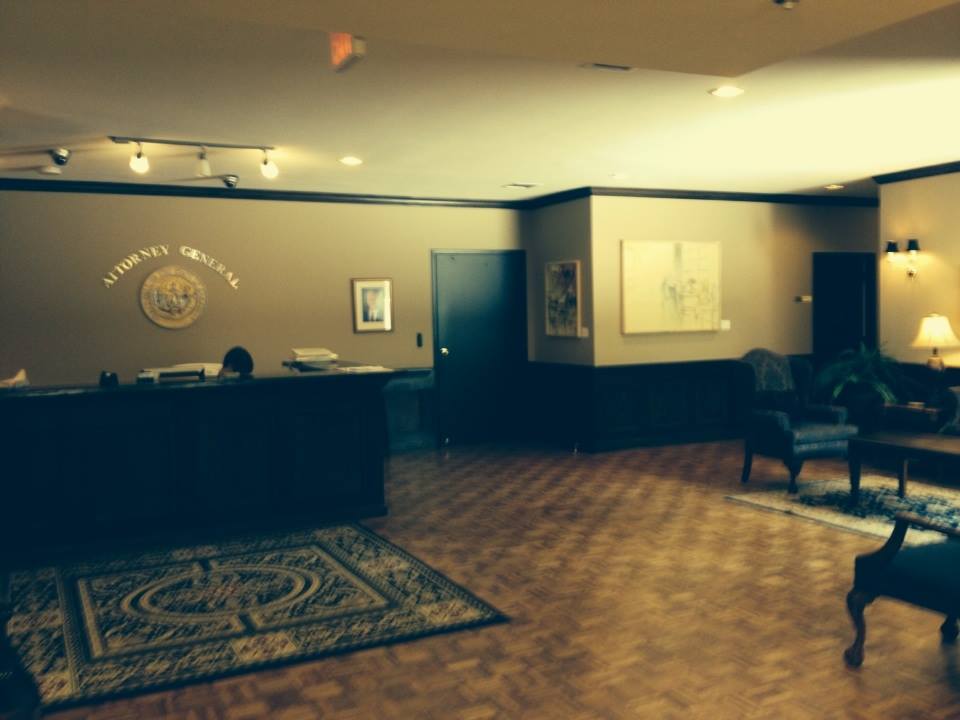
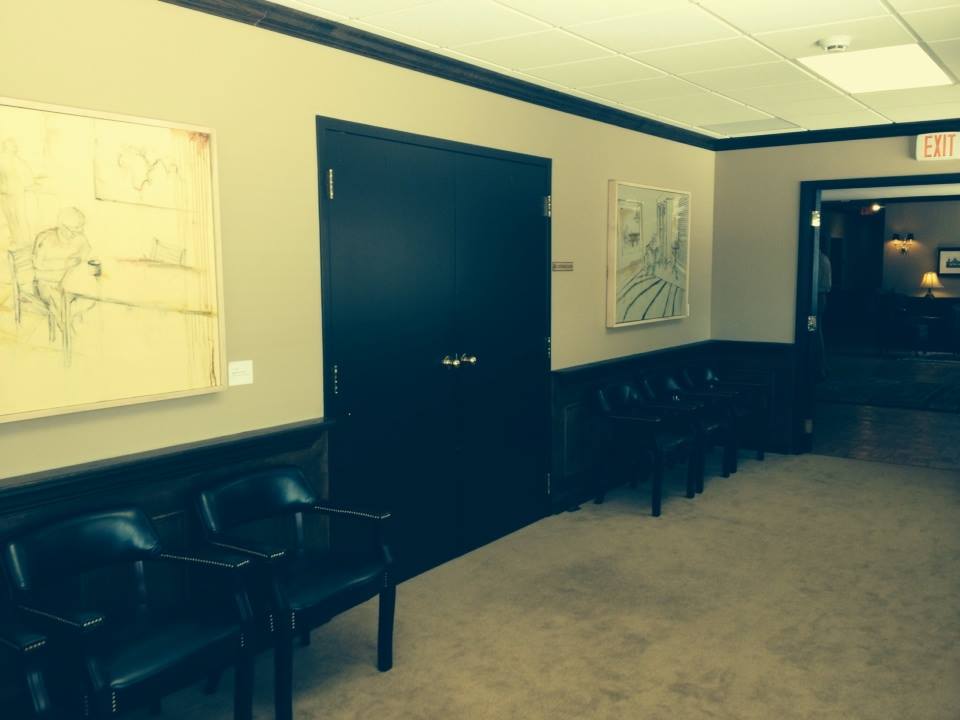
Today through the end of the year – Me: “I have a website and I blog. I also have some work up right now at the Arkansas Attorney General’s office downtown in the Two Towers Building.”

How did this happen? Did I get discovered through my website or blog? Was there someone going from door to door in my neighborhood looking for just the right art? Did I go from office to office with samples of my work to see if anyone was looking for my work? It all happened through the Arkansas Arts Council.

I am a member of the Arkansas Artist Registry, and so I get emails of opportunities to show, sell, to apply for grants and fellowship, and other artist things. The Arkansas Arts Council sent a call for submission: “The Arkansas Attorney General’s Office seeks submissions from the Arkansas Artist Registry artists for a revolving exhibition of selected works in the reception area of the Office, which is open to the public for meetings, conferences and other events.”  and this attachment

AG Call for Artists Info Page_final

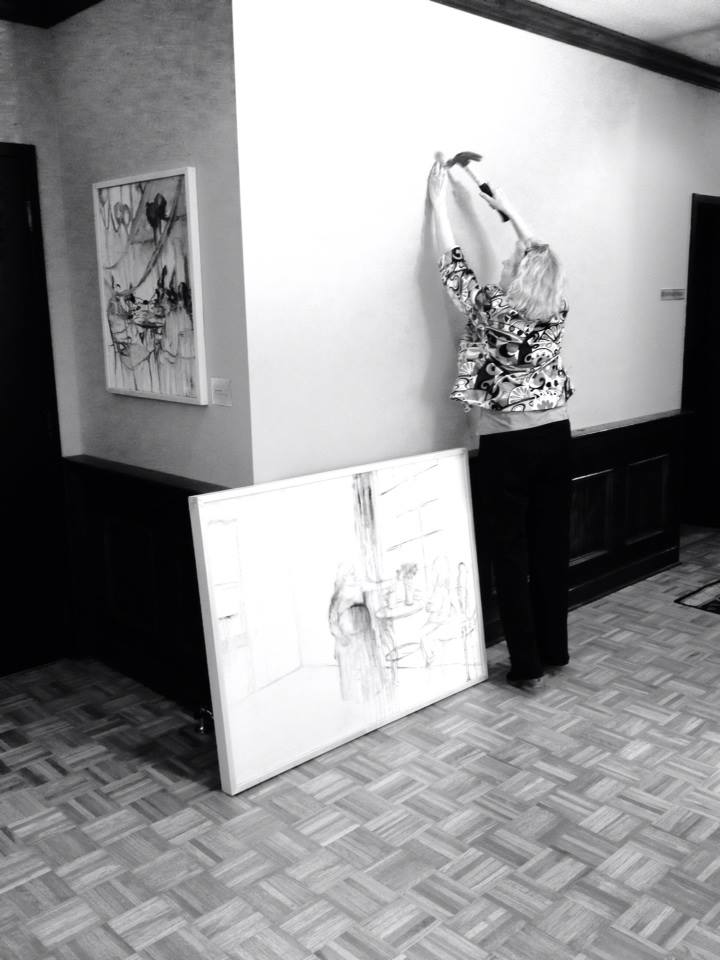
I submitted and was selected! Laurie Jo helped me to hang the show.

Show1 Show4 Show2
Show10 Show11
Show12Show5
Show9Show7Show6
Show3Show13

Art Studio Series: Neal

Neal Harrington is an artist and Associate Professor of Art at Arkansas Tech University who teaches printmaking and figure drawing.  He also manages the gallery at Arkansas Tech University.

I met Neal at the Arkansas Arts Center where we competed in the first round of the Portrait Face Off. It was super awkward meeting an artist and immediately competing, and we both acknowledged the oddity of it from the beginning. While we were waiting to be judged (two women walking around with notebooks whispering to each other), I was able to meet Neal’s artist wife Tammy, who also was competing. Neal won the competition and we parted ways – only to be reconnected the next day in the Sunday morning Arkansas Democrat Gazette. They recaptured the intense and awkward battle of our portrait face-off, and we looked so regal in our drawing stances!

Lauren_Newspaper

I Facebook friended Neal after that, and have enjoyed all of his news feeds of creativity.

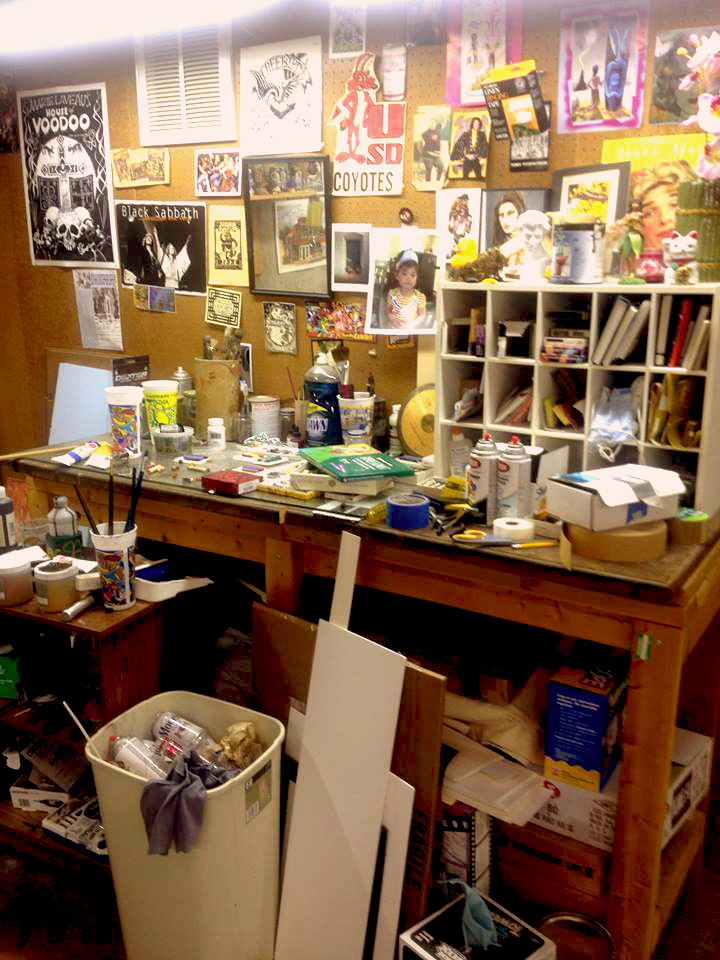
Neal Harrington’s Art Studio – Neal’s studio is a shared space with his artist wife Tammy Harrington. Neal writes about his studio below.

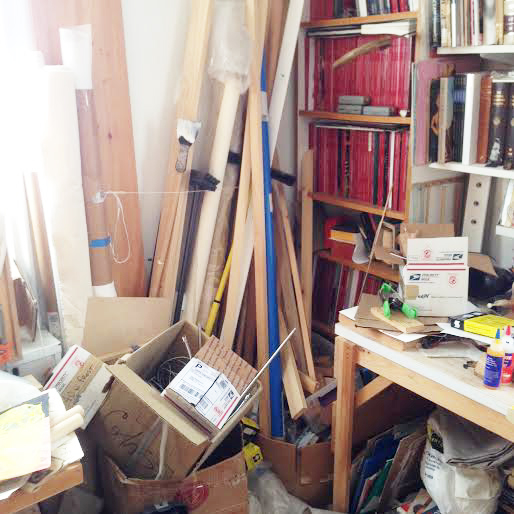
“My studio is in the basement of my house and is crazy messy. Organized chaos. I do clean it sometimes but then I am utterly confused!”

NealStudio6 NealStudio1
NealStudio4
NealStudio5 NealStudio3

When I commented on the fact that there were instruments in his studio, he replied, “Yes, I can be very loud in there!”

You can visit Neal’s website at nealharrington.com/home.

Art Studio Series: Dan

Dan Bina is an artist and professional living in Brooklyn, New York. I solely know him from Facebook. He went to school with mutual friends at Kansas City Art Institute. I saw his work from another friends post and requested to be his friend. He accepted my friend request, and now I get to vicariously live through his artist life in New York! Dan’s wife Katya Mezhibovskaya is also an artist and her website is katyamezhibovskaya.com

Dan’s website is danbina.com and shop Kahokia is kahokia.bigcartel.com

Dan Bina’s Art Studio – Dan writes about his studio below.

“My Brooklyn based home studio functions as a personal laboratory for developing a multitude of works.”

Dan Bina Studio 7 Dan Bina Studio 4 Dan Bina Studio 5

“It’s primary function is to provide a dedicated space to make messes in and keep them active for a duration of time. This is facilitated and aided by two functional doors and being able to close them.”

Dan Bina Studio 3 Dan Bina Studio 2
Dan Bina Studio 1 Dan Bina Studio 6

“The tight quarters in my studio are a challenge to work around and simultaneous projects do get in the way of each other resulting in this series of pictures which serve to highlight chaos as an aspect to the creative act.” 

Dan Bina working in his Brooklyn studio