
The Boy and the Firefly
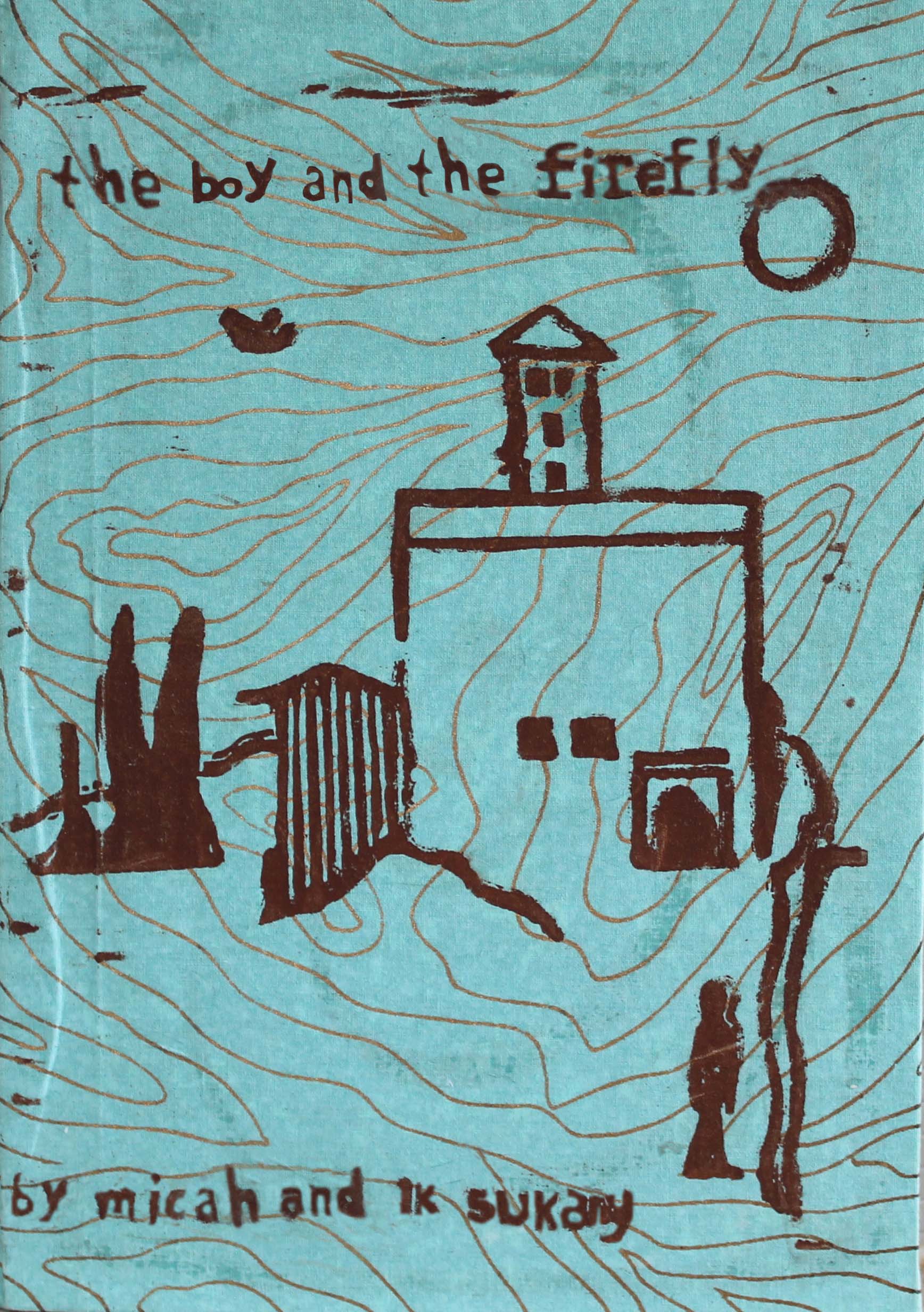
Written by Micah and L.K. Sukany
Illustrations by L.K. Sukany
Edited by J. Bradley Minnick
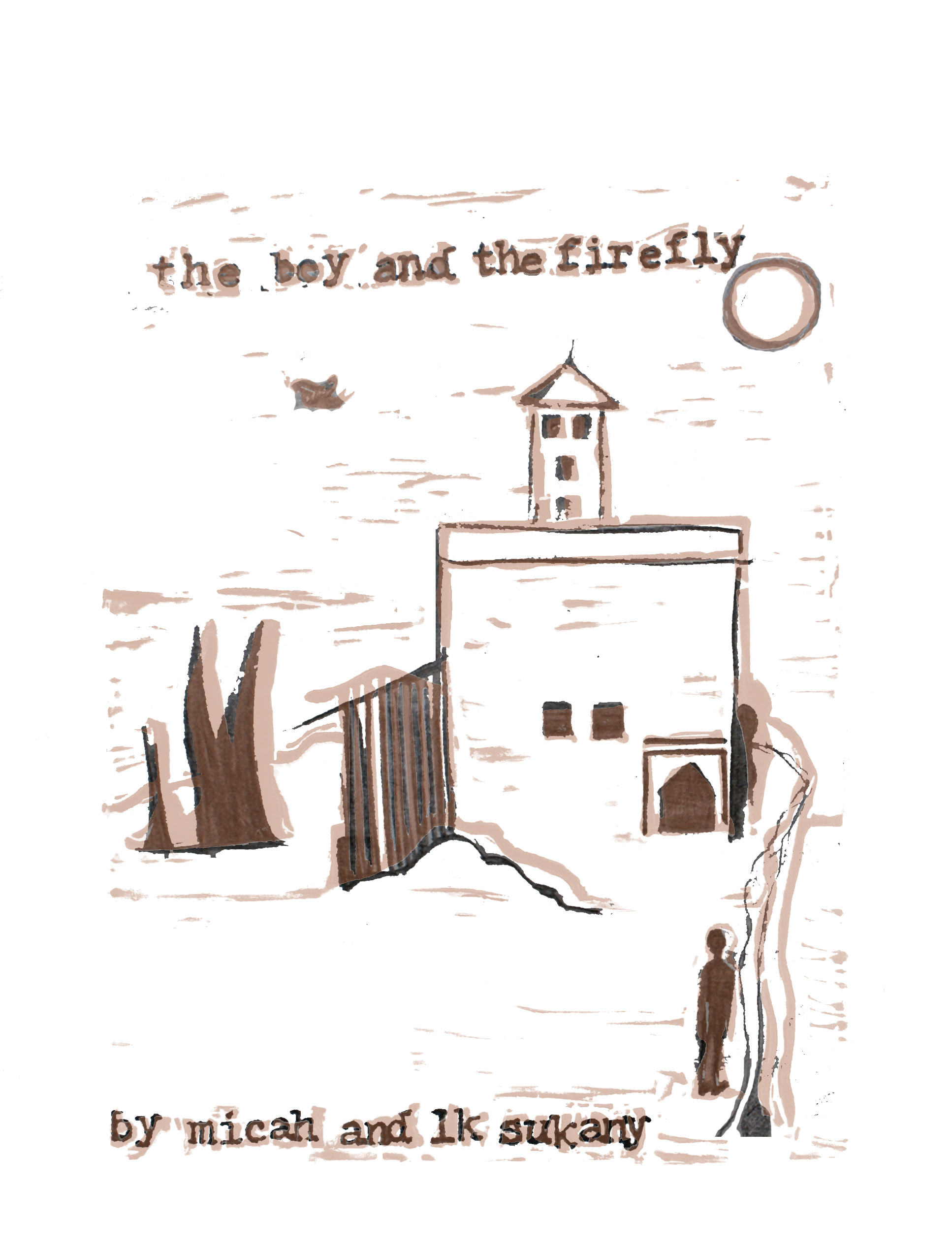

Once there was a boy named Calipso. He was small even for a little boy. His family told him so. He never liked hearing it, but he was good-natured about it and was polite to his seven brothers and sisters except at dinner when they would steal his carrots and he would pout. One evening after a bad day at school and all his delicious carrots had been stolen, Calipso could take no more. He whistled, then he shouted, then he slammed his fists on the table, and then pinched his sister.
At first no one knew who had done it. It seemed to the family as if a noisy ghost had come to dinner. They looked under the kitchen table, then behind the door, and then in the cupboards and in the pantry. Who had made all that fuss? “It was I!” shouted Calipso standing on the table. “Oh,” said his mother and father. Calipso was sent to bed without any dessert.
“The Boy and the Firefly” is instrumental.

Calipso trudged up the long flight of stairs to his bedroom; however, Calipso’s bedroom was not a room at all. It was more of a windowsill partitioned off from the garret stairwell by pale curtains. Settling into his wicker basket, Calipso peered out a small window at the moon, “Oh, that I was a beam of light too,” he thought.
As he reflected on the adventures he would have if only he were able, Calipso noticed a lovely thing. Off in the distance, he recognized a faint, glimmering light. Slowly that tiny, yellow bulb floated up to his window like the reverse flight of a lazy paper airplane. Amazed, Calipso watched as the firefly drifted through a crack in the window and landed on his nose. “Hello,” said the firefly, “Are you ready?” Puzzled, Calipso asked, “Ready for what?” “Your flight of course,” said the firefly. Without answering, Calipso took hold of the firefly and glowing dimly flew off into the night sky.
Calipso Song
I am waiting for a feel right.
I am waiting for a new life.
New adventures.
New perspective mind.
I am waiting for a feel right.
I am waiting for a feel right.
I am waiting for a new life.

Together they flew over wide rivers of clouds and around dense mountains of light into the Land of Dreams. Despite the great distance traveled, Calipso felt as though they had been gone for only a short time. All along Calipso had not known where he was going, but he had been there many times before. Everyone has for everyone dreams.
Stepping down under the shadow of a tall tree, Calipso felt a bit cotton-headed, but in all better for being back on the ground. Looking around, Calipso saw seven bridges stretching from one bank of a river to another. “Those are the seven bridges into the Land of Dreams,” the firefly explained. “Before your grandfather’s grandfather’s time, there was one bridge, but now there are seven.” “Oh,” said Calipso. Then all around him, Calipso saw a great multitude of people. He giggled for they were all in their pajamas. “Those are the dreamers. They wait for Grog.” “Who is Grog?” Calipso asked.
The Flight of the Firefly
You see things so very clearly.
Eyes glow brighter than the moon.
Fly so fast it’s quite delightful.
I love to be here with you.
Wish so long for great to happen.
Now it’s here, I’m here with you.
Show me worlds and so much more.
Things are changing, that’s for sure.
Oh, my heart.
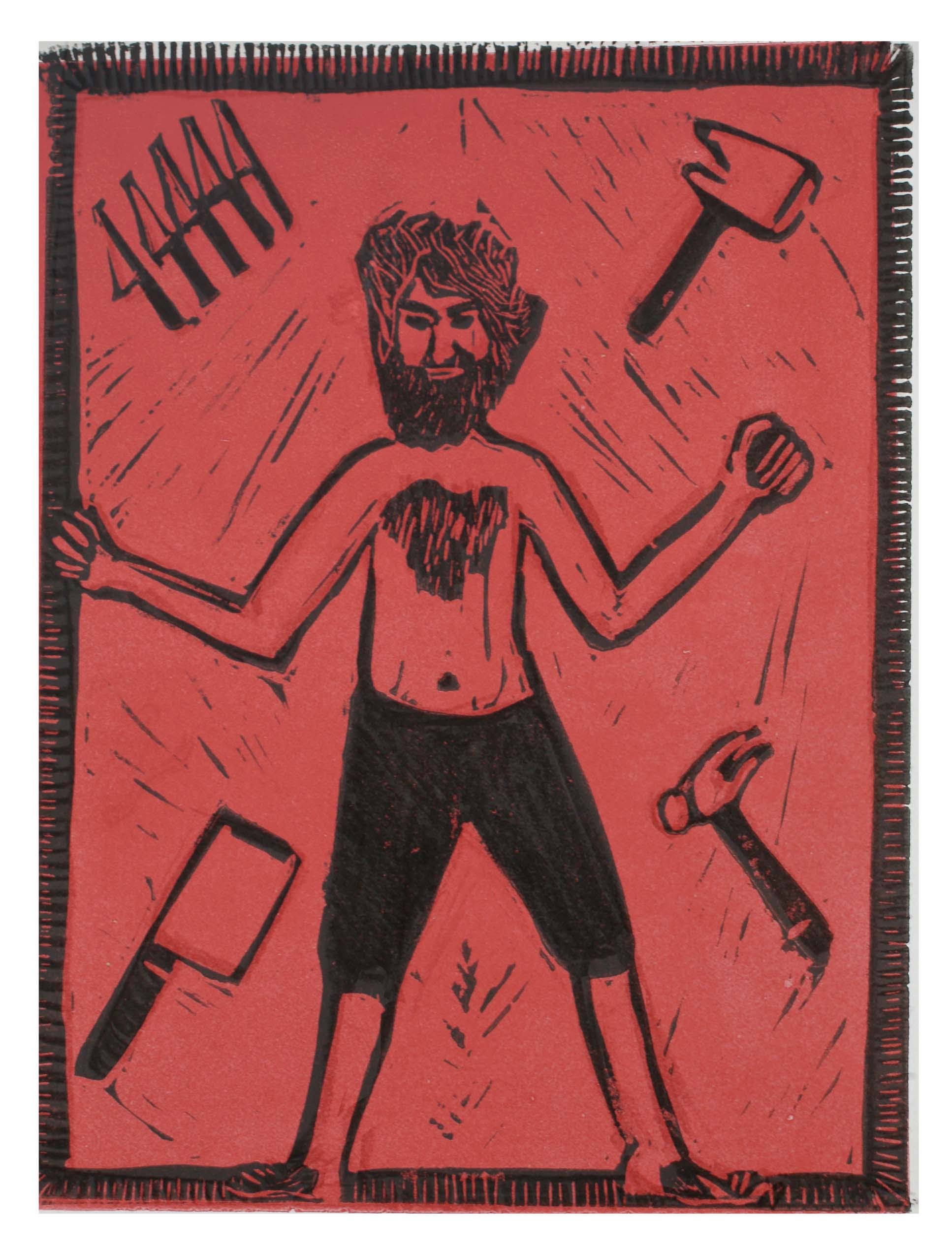
Calipso was curious, but his curiosity turned to fear when he saw a towering giant. Calipso watched as Grog lifted one of the sleepers, placed him on a large, white stone, and deftly dismembered him. “Oh, how horrible,” Calipso said. As Grog reached for another sleeper, Calipso, turning away, noticed a twitch in the arm of the dismembered man. Staring, Calipso saw another twitch–this time in the man’s leg. Then an eye blinked, and then a head rolled upright. Slowly each part began to stir and make its way across one of the bridges.
“How peculiar,” said Calipso, “Will they stay that way all night? I wonder what a toe dreams?” The firefly glowed dimly and said, “A toe dreams what an eye dreams, what an arm dreams. A brother-giant, Drow, puts them all back together right before the sleeper wakes.” Calipso nodded and then asked a sensible question, “How will I get across?” “Oh, you are quite safe,” said the firefly, “You are too small for anyone to notice.” Relieved, Calipso crossed unnoticed into the Land of Dreams.
Giant Song (Grog)
I am Grog from the land of Nod.
The land of mist and the land of fog.
I am the seven bridges keeper.
I am the way and you are the sleeper.
Seven bridges, seven secret words.
Heads, shoulders, knees, and toes.
Arms and legs and torsos.
Seven bridge, seven secrets heard.
Each body part knows one secret word.
Axes, knives, hammers, and cleavers.
I am the giant and you are the sleepers.
Chop, chop, on the chopping block.
Timers, roosters, set alarm clocks.
By the time you wake up, I’ll put you back together.
But there’s no need to worry cause the dream land last forever.
I am Grog from the land of Nod.
The land of mist and the land of fog.
I am the seven bridges keeper.
I am the way and you are the sleepers.
The Red Bicycle
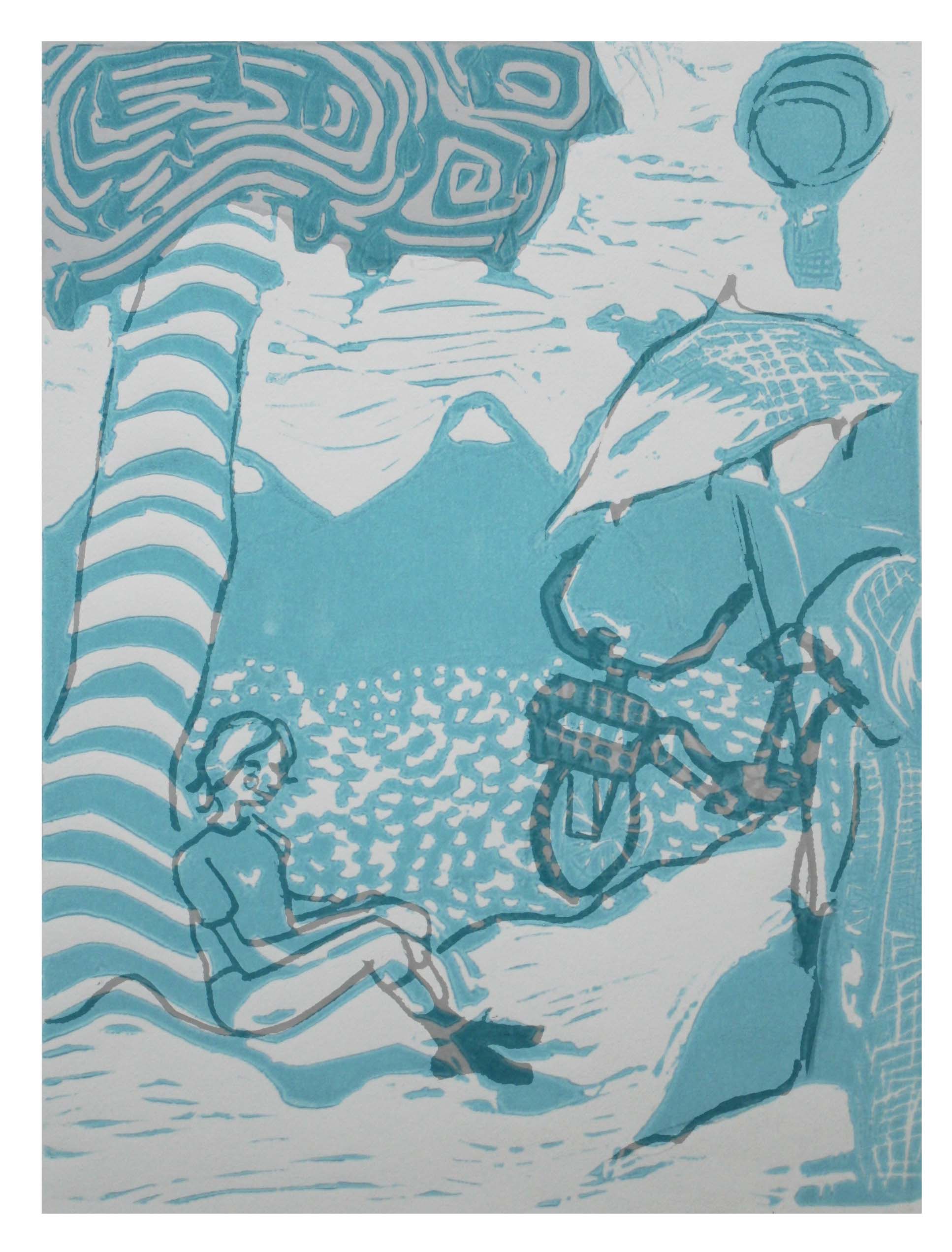
There was once a boy who wanted a bicycle. “Not just any bicycle,” he thought. He needed one that would take him on adventures to faraway places–a bicycle that would take him through the sky to the nearest star where great princesses lived. He imagined a great and brave quest. He would loll under the almond tree dreaming of these things.
One day an old woman hobbled near. He heard her approach. He opened his eyes and looked at her. She stopped and looked at him. “I see your dreams and I know them,” she said. The boy looked away ashamed of his vulnerability. Inside her cloak was a red bicycle. The boy’s shame was turned to delight, but at what price? “No money,” she said, “but your life now will not be your own.” He nodded, for he longed for this a long time. The old woman continued on.
The boy took the red bicycle and peddled and peddled. Though some days were tiring and other days weak, most days were filled with joy–the joy of doing what one was made to do–a fulfillment and a familiarity.
“The Red Bicycle” is instrumental.

The Boy and the Broom
Once upon a time there was a boy with a broom. His mother told him that his chore for the day was to sweep his room. He did not stop there. He swept and he swept. He swept out his room and swept throughout the house. He swept the house and swept right out the door. He swept the whole front porch, and he swept the stone walkway. He just kept sweeping right on into the forest. After he swept the whole forest, he moved down into the valley. After he was done with that, he swept towards the desert. He swept the mountains, the ocean, as well as the beach.
He swept the caves and the underworld. He swept high and low, near and far, deep and wide. As he was finishing up a canyon, he stopped at a tall tower. He looked up and saw two damsels in distress. “Hullo” he shouted. The damsels looked down out of the tower, “Hello.” “Nice weather we’re having today, eh?” the boy said. “Oh yes, quite lovely,” replied the damsels. After a bit of sweeping around the tower, the boy waved goodbye and continued on sweeping toward the morning light.
The Boy with the Broom
She told me to go sweep my room.
But I sweep all day, I sweep all night.
I sweep the mountains, beach, and sky.
I love to sweep. It’s the things to do.
I would sweep for them, and I’ll sweep for you.
Cause I sweep all day, I sweep all night.
I sweep the walls both low and high.
I sweep a lot.
Sweep the oceans, deep and far.
Sweep the worlds that are not ours.
And when I sweep I feel complete.
No matter where I sweep for free.
Cause I sweep all day and sweep all night.
I sweep the dark. I sweep the light.
I sweep a lot.

The Lantern Dance
Long ago there was a beautiful girl, a princess-to-be. She was polite and demure, but enjoyed nothing more than running the hills and forests at night. She kept late hours, dancing wild and barefooted with the woodland creatures. Soon she grew from a girl into a woman. Thereafter a prince came out from the palace and took her back as his wife. She exchanged summer dresses for gowns and meadows for ballrooms.
Everyone marveled at her grace and poise, but like a flower pulled by its roots, she began to fade. Seeing this, the prince summoned all of the wisest doctors and apothecaries, but none could find a cure. Hope was gone until one evening an old seamstress came to the palace. “Go away,” said the prince, “She has no need for gowns.” Without a word, the old woman departed, but she left behind a gossamer gown. Intrigued, the princess picked up the garment and recognized its patterns at once. She threw the garment on and burst from the palace onto the gardens outside.
As she ran, the summer fireflies rose up around her–flashing and falling, some clinging to her, others rising again. Those in her gown cast out the shadows of the shapes embroidered there. Around her the woodland shadows gathered. She danced and the prince watched from the courtyard.
“The Lantern Dance” is instrumental.
Two Boys and Two Fathers
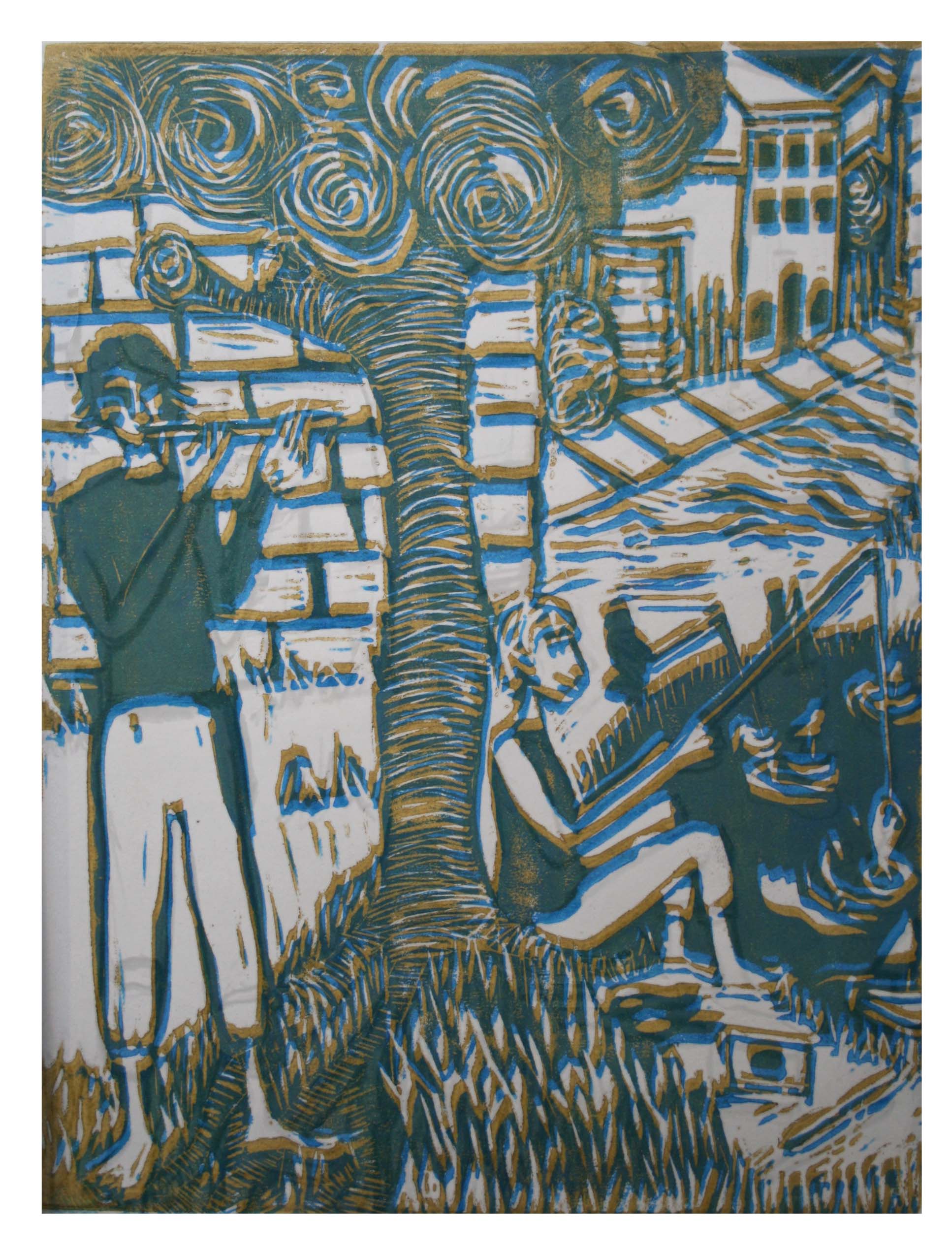
Once there was a little boy who loved to play the flute. He practiced whenever he could. He practiced after working in the factory, before bed, and again in the morning before work. He played every day because he loved it. When he slept, he dreamed of being a master flautist. However, the boy’s family was poor, so when he woke, he went to work.
During the same time, there was another boy. He was taught to play the flute; however, he was not an interested student, and paid little attention to his instructor. He would skip out on his lessons to run with older boys and to fish. Despite years of study, the boy had learned only one simple tune.
It was his father’s dream to play the flute, to be a flautist, not his. Every day the father asked his son to play for him, and every day the boy would play the same weak tune. This continued on until one day, his father did not ask his son to play. He came home too weak and too tired. The next day, the father died. The boy missed his father very much.
“The Chinese Sounding Song” is instrumental.

Stepping back onto the bridge, Calipso felt that he was somehow different. He felt bolder and more alive. “I love to dream,” said Calipso, “I can be or do anything.” “So many people feel that way,” said the firefly, “but a dream is something that just happens to you. Like life, it is little more than that.” “Then why do I feel so free here?” asked Calipso. “Because you believe so well, and yet you do not believe at all,” instructed the firefly. “It is a paradox, but you will understand more as you grow.” Calipso nodded and grew silent.
Calipso and the firefly left the way they came, passing through the rivers and fields of white–flying over the clouds beneath the moon. Calipso saw the towns and villages twinkling like fireflies. He began to understand. Looking ahead Calipso saw a bright star hovering in the eastern sky. Somehow he knew it was the last star before morning. Without hesitation, Calipso closed his eyes and made a wish.
Twinkle Twinkle
How I wonder what you are.
Up above the world so high.
Like a diamond in the sky.
Twinkle twinkle little star.
How I wonder what you are.
Starlight, star bright, the first star I see tonight.
I wish I may, I wish I might.
Have this wish I wish tonight.
The End.

This story is for the light of hearts, the heavy of hearts, and those who claim to have too much or too little heart. It is for those who enjoy creativity, art, passion, and within whom a curiosity thrives for the deeper understanding of things.
We love to create, and The Boy and the Firefly is one of many parts of us. We are so excited to be able to share this storybook with you and all of the things that we came to understand through its creation. We were stretched in many ways throughout the process of this project. We also hope that you will be stretched, challenged, and maybe that it sparks in you creativity and renewed hope.
We wish to use our stories, our art, and our music to allow people the realization that we will always have something to share inside of us that is important and special.
xoxo
The Damsels in Distress (2007)

You can listen to this story online at
thedamselsindistress.bandcamp.com/album/the-boy-and-the-firefly












 Paper Opera